Influencer Marketing & Social Commerce 2025: Sales Guide

In 2025, Influencer Marketing becomes more powerful than ever. Content creators don't just influence... they sell. Moreover, influencer Marketing in 2025 has changed completely, and Social Commerce makes shopping more immediate than ever. In this article, you'll see how trends are moving, how creators are increasing sales, and what you need to leverage their power for your brand. A clear, practical introduction to everything you need to know.
What is Influencer Marketing & Social Commerce in 2025
The role of Influencer Marketing in driving sales
First of all, content creators are now the "bridge" between you and your potential customers. They don't just promote products, they build trust and credibility with their audience. This means that when they share a product or service, their followers are more likely to listen and engage.
It's not just the size of their audience that matters. Research shows that micro-influencers with 10,000-50,000 followers often have a higher engagement rate than larger influencers. For you, this means you can reach more targeted and active audiences, with a higher chance of conversion.
They also act as storytellers. Through tutorials, reviews, or personal stories, they present products in a way that traditional advertising cannot.
How Social Commerce will influence shopping in 2025
Social Commerce enables instant shopping through Instagram, TikTok, and Facebook, without users leaving the platform. Consumers trust products recommended by content creators more than traditional advertisements.
Furthermore, through live shopping or shoppable posts, you can watch how users react to offers or product presentations in real time. This gives you valuable insights into what works, which audience responds, and how to improve your next campaigns.
Overall, content creators and social commerce are working together to convert engagement into measurable sales, while building communities of loyal customers around your products and services.
The Biggest Influencer Marketing & Social Commerce Trends for 2025
Micro-Influencers: The new force in Influencer Marketing
Therefore, you can target more specific and active audiences with these creators. Their small communities are more loyal and engaged, so each post is more likely to lead to interaction or purchase.
These creators can be found on Instagram, TikTok, YouTube, and niche communities, allowing you to reach exactly the audience you are interested in.
Virtual Influencers & AI in Social Commerce
In 2025, we are seeing a sharp rise in virtual influencers. These are content creators who only exist digitally, but can generate engagement equal to or greater than real influencers in specific niche communities.
At the same time, AI-driven campaigns allow for the automation of content creation and personalized messages, while maintaining a high sense of authenticity. You can monitor real-time results, customize messages, and optimize ROI without time-consuming processes.
Performance Marketing & ROI in Influencer Marketing
Performance marketing is becoming an essential tool for measuring the true value of collaborations with creators. Instead of simple impressions or likes, metrics focus on conversion rates, cost per acquisition (CPA), and return on ad spend (ROAS).
Consequently, you can see which creators are driving real sales, what content works best, and where to invest more. Social media platforms now offer more detailed analytics so that every decision is based on data rather than assumptions.

How Influencer Marketing turns engagement into sales
Live Shopping: The future of Social Commerce
Live shopping events allow you to see in real time how users react and which offers perform best.
Shoppable posts make purchasing simple and immediate, without the user leaving the platform. Research shows that users who view shoppable content are up to 30% more likely to complete a purchase than those who view simple advertising content.
UGC in Influencer Marketing: Leveraging social proof
User-generated content acts as social proof. When people see others using and approving a product, trust increases.
UGC can significantly boost purchase intent, surpassing traditional product images in effectiveness. For you, this means that leveraging content from real users is a tool that pays off in practice.
Creating Effective Influencer Marketing Campaigns
Choosing Influencers with AI tools
You can use AI tools to find the right content creators. They analyze engagement, demographics, interests, and previous collaborations.
With this in mind, with just a few clicks, you can see which creators have an active and targeted audience, which ones produce content that fits your brand, and which ones are likely to deliver results quickly. This saves time and reduces the risk of making the wrong choices.
Influencer Marketing KPIs that measure success
It's not enough to have creators; you need to know what matters. Focus on KPIs such as conversion rate, click-through rate, cost per acquisition (CPA), and return on ad spend (ROAS).
Tracking these metrics shows you what content works, which audience responds best, and where improvement is needed. Data from social media platforms allows you to make decisions based on actual results rather than assumptions.
With the right combination of creators and metrics, you can create campaigns that deliver real performance and measurable results.
The Future of Social Commerce & Influencer Marketing
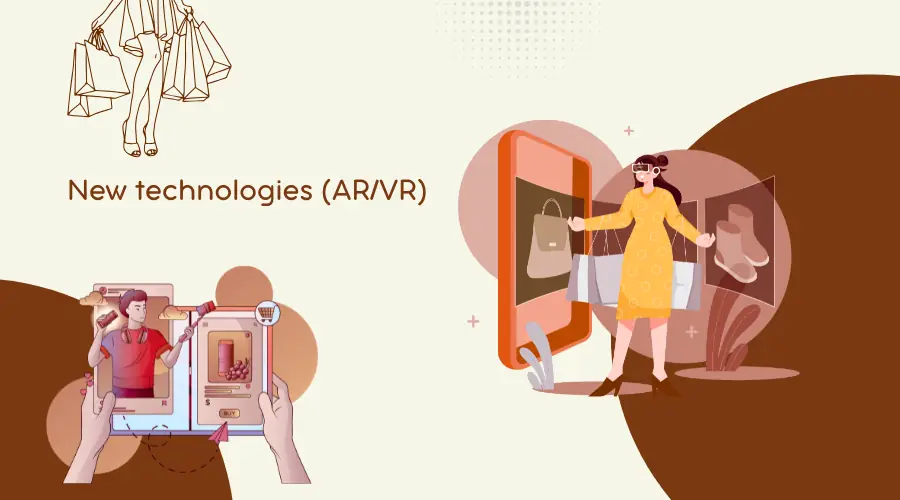
How AR/VR will shape Influencer Marketing
Augmented reality (AR) and virtual reality (VR) technologies bring a new dimension to social commerce. You can see how a product will fit into your space or try on clothes and accessories virtually before you buy.
In fact, with AR/VR, interaction becomes more realistic and personalized. Using AR for product testing can significantly boost purchase intent, as it offers a more realistic and interactive experience than traditional online previews.
Brands can create immersive experiences without having to set up physical stores, while creators can integrate these technologies into their content for greater engagement.
The future of Influencer Marketing beyond 2025
Social commerce will continue to evolve at a faster pace. Platforms will become more personalized, using AI to recommend products to the right audience at the right time.
Additionally, you will see an increase in live shopping events and interactive content, where users will actively participate and influence offers in real time.
In addition, the integration of AR/VR, AI, and social analytics will create an ecosystem where creators and consumers collaborate more directly than ever before, making shopping more experiential and immediate.
Content creators have become a key driver of sales in social commerce. In 2025, their power will transform interactions into measurable results.
Ultimately, with the right strategies and data analysis, you can see which creators bring real value and how to maximize the performance of your campaigns.
Social commerce is constantly evolving with new technologies and a more personalized shopping experience. By following trends and leveraging creators, you are at the forefront of the future of digital commerce.
🚀 Interested in improving your digital presence? Contact us to see how we can help your business grow online.
👉 Call us at +302610318598.